

Q&A
The Soul Food Evangelist
Author, activist, and culinary historian Adrian Miller on spreading the gospel of soul food.
by MyDenver Staff
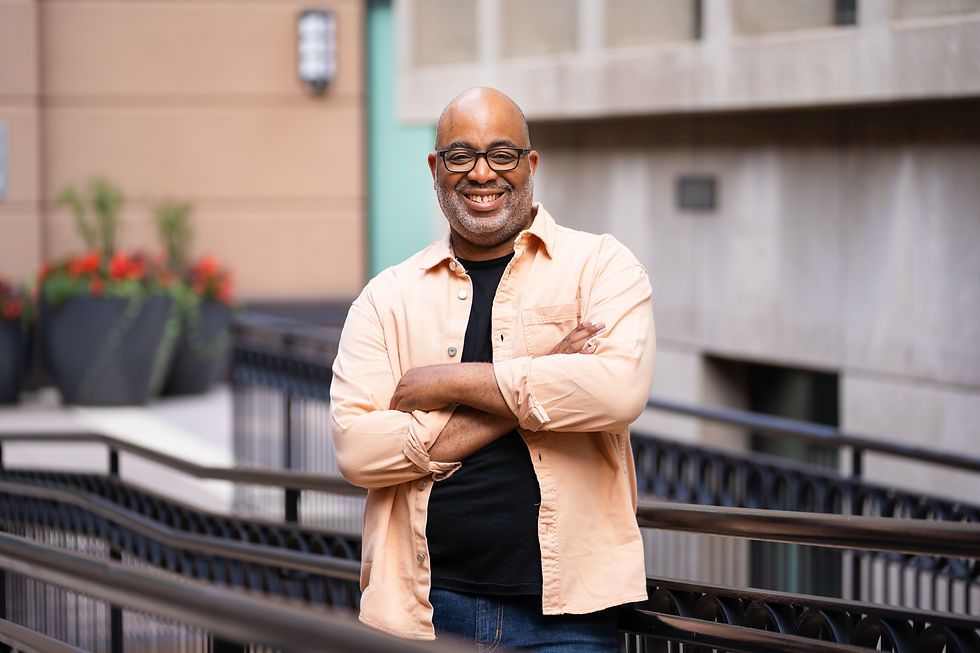
You’re on the advisory board of the nonprofit Slow Food Denver, which recently celebrated its 25th anniversary. How did you get involved with this organization and its mission?
Slow Food’s mission is really about creating a more just and sustainable food system and promoting the enjoyment of local food to the entire community. I grew up in Denver and, when I was young, my thinking about food was mostly just about taste. However, as I’ve gotten older and through my journey doing food training and all these other things, I’ve started to have a more holistic view.
I’ve developed a deeper appreciation of food—how food connects me to my family and my community, and especially to my church. But I’ve also seen that, despite our nation’s prosperity, we still have so many issues with hunger and also with food waste. So many people struggle with food insecurity; it’s just heartbreaking, so the Slow Food mission really resonates with me, and I’ve been an advisor to the organization for about six years.
Do you consider yourself a food activist?
Definitely. I would also say that I’m a food justice evangelist. We’ve been getting one version of food history that’s been very Eurocentric. A lot of my work has been to show the African heritage and contributions to what we call American food, so my activism has been really in curating a more complete picture of our nation’s food traditions.
You’re an expert on many different types of cuisine, but especially soul food. How’s the soul food scene in Denver?
Denver’s Black community is underappreciated. People always joke that there are no Black people in Colorado, but Denver’s Black community is around 10 or 11%, which is very close to the national average. Soul food has been a part of our community for decades, but soul food has also gotten somewhat of a bad reputation because people can be so negative about it.
Outside of the Black community, people think soul food is inherently unhealthy. Within the Black community, people think it’s slave food, which I can understand because there’s a narrative that African Americans, particularly enslaved African Americans, took the food that white people didn’t want to eat, threw their creativity and love into it, and turned it into something delicious. But if you go back and actually look at what people were eating, people of the same socioeconomic class were pretty much eating the same food; they just weren’t eating those foods together because of racism. That blew me away because I had bought into the whole narrative that soul food was something wholly created for and by Black people, so it was a revelation to realize there was a lot more commonality than I previously thought.
Has soul food gotten healthier?
Soul food is really the celebration food of the South, transplanted to other parts of the country. And let me just say this: If you eat the celebration food of any culture on a regular basis, it’s not going to be good for your health. That’s the whole point of celebration food, right? It has more sugar, more oil, more flavor because it’s something you reserve for special, celebratory occasions.
Lately, if you look at what nutritionists are telling us to eat, it’s more dark leafy greens and sweet potatoes. They’re calling hibiscus and okra superfoods, and they’re saying to eat more seafood—these are all pillars of the African-American diet. Plus, if you actually look at what enslaved people were eating, it’s very close to what we call vegan today. In fact, traditional West African food is very plant-based and easily translates to a vegan diet.
How does your faith intersect with your culinary interests?
Food is an important part of the Christian faith tradition, as it is in many others. I run the Colorado Council of Churches, which is a group that brings Christians together to get to know one another across denominational lines and do social justice work together. The early Christian Church actually started with potluck meals in people’s homes. This holy potluck idea is a strong part of the culture because food helped build a sense of community—a lot of the early church communities were built that way.
I have so many fond, vivid memories of my childhood and these meals after church, where you had these Black church mothers just throwing down—my mom was one of them, she was a very highly regarded cook within the congregation. So food fosters connection, and there’s definitely a spiritual component to cooking. When you cook for somebody, you’re saying that you care about that person’s survival, and that you want them to stay a while. So, in a way, you’re saying that you love that person.
Don’t miss Adrian’s talk at the Columbine Library: Juneteenth: The Story of Soul Food
Photographs by Ryan Fila and Nikki A. Rae Photography
Like this article? Share it with your friends!