

Current, Feature
Forces of Nature
This past spring, Denver Parks and Rec launched an initiative to replace the grass lawns around City Hall with native plants and wildflowers, an eco-transformation affectionately known as “Coloradoscaping.”
.jpeg)
This past spring, Denver Parks and Rec launched an initiative to replace the grass lawns around City Hall with native plants and wildflowers, an eco-transformation affectionately known as “Coloradoscaping.” The project estimates that converting just one acre of Denver’s “front yard” will save approximately one million gallons of water per year. In response to Colorado’s historic drought and warmest winter since 1894, Denver Water recently implemented mandatory restrictions for metro residents, limiting lawn and garden watering to twice a week. In the increasingly urgent effort to conserve water, every acre counts—for people, plants, animals, and our future on this planet. Fortunately, turning your own backyard into a climate-resilient oasis that’s both water-efficient and scenic isn’t as daunting as it seems. Even small changes can compound over time to make a huge difference.
Beginning at Home
Callae Gedrose has been gardening for over 20 years, but when she first started, she hired a landscape architect. “After that project was complete, I was disappointed with the plantings. None of them seemed to fit, and none of them thrived,” she recalls. “So, I ripped out all the landscape fabric and all the plants, and that’s when I noticed that the soil had no worms and no microbes; it was just dead.”
Intrigued, Gedrose began educating herself about naturalistic gardens and scouring local nurseries for native plants. She converted her yard section by section. “I discovered that the more above-ground biodiversity I added to these spaces, the more pollinators and birds they attracted,” she says, “but I also noticed that when I started digging back into the soil, it was full of life.”
Today, Gedrose is a certified Regenerative Gardener, a certified Soil Advocate, and the founder of Honeywood Garden Design, which specializes in “living landscapes.” In her own garden, she created a microclimate by updating a dry shade section with pollinator plants and a dense ground covering. “It’s 10 degrees cooler in that area than the rest of the space,” she says, “and then I noticed a lot of birds taking refuge there.”
Gedrose also helps her clients understand what regenerative practice entails and how they can become “responsible land stewards.” Colorado encompasses eight different major ecosystems, from semi-desert shrublands to montane forests to alpine tundra. Denver possesses a similarly rich ecological spectrum, due to the city’s location at the edge of the Rockies, where the High Plains and shortgrass prairie meet the foothills.
Still, Gedrose points out that Coloradoscaping doesn’t require only native plants to be effective. “I don’t use any plants that require a high amount of water usage,” she explains. “But I believe that our climate is in a state of fluctuation, and we need to be able to adjust. Certain non-native plants can thrive in our system and aren’t invasive—they serve a purpose and support our habitat by adding to our biodiversity.”
Function and form are equally important to Gedrose. “I consider myself a garden designer, and it’s also my creative outlet,” she says. “I’m creating these gardens for a purpose; but for me, it’s also about creating beauty.”
The Hive Mind
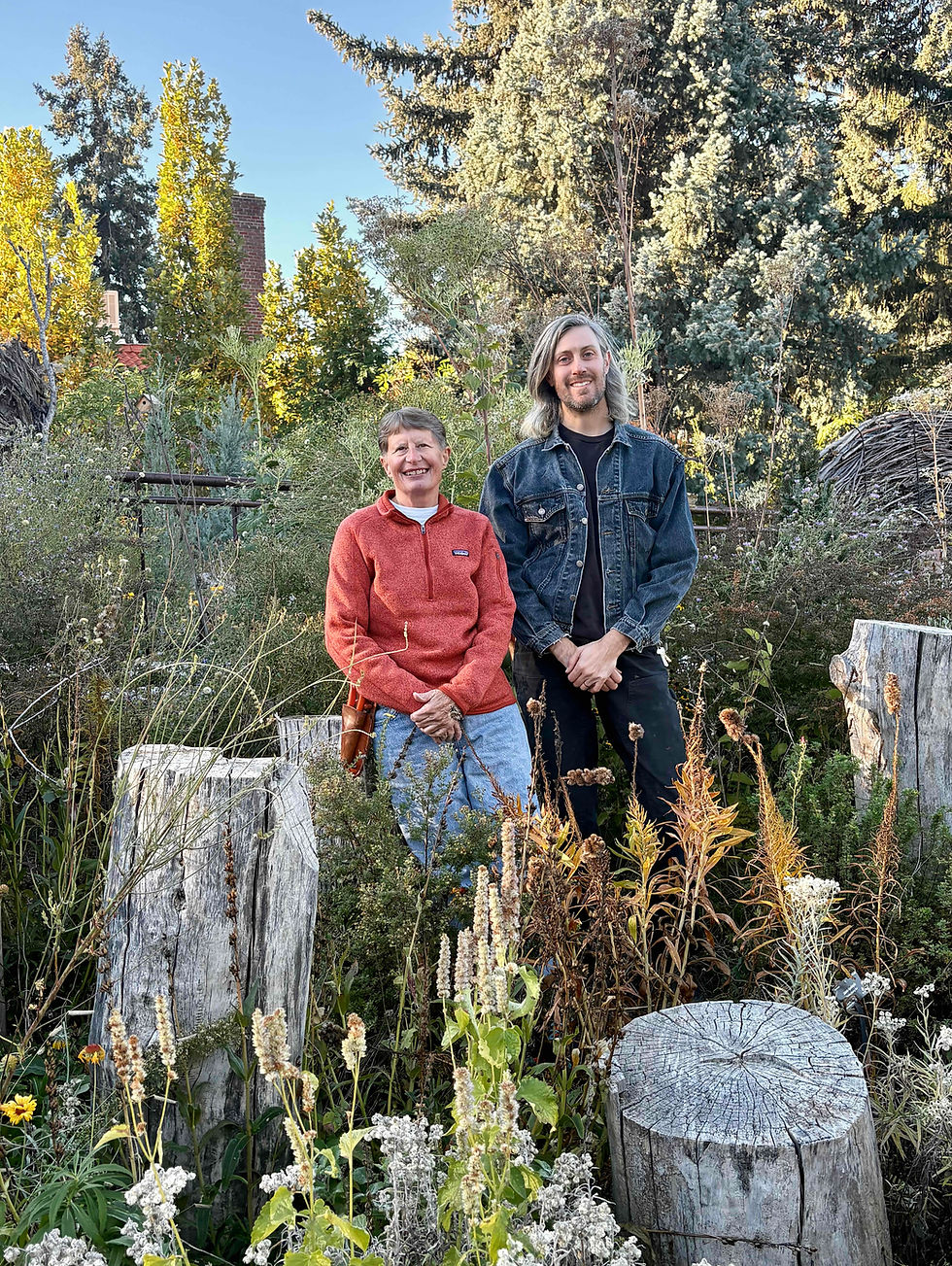
Gedrose isn’t the only local gardener who took matters into her own hands. During the pandemic, Lisa Negri bought the house next door to hers in East Wash Park, tore it down, and founded SummerHome Garden, an urban garden open to the public that’s composed entirely of drought-adapted plants. What began as Negri’s passion project has since evolved into a beloved community habitat.
With the guidance and expertise of Kevin Philip Williams, a horticulturist at the Denver Botanic Gardens, Negri designed SummerHome Garden to focus on sustainability, aesthetics, and regenerating pollinators such as bees and butterflies. “We started with 4,000 plants and about 45 species,” she says. “Now, we’re at 180 species of plants that will tolerate the current climate in Colorado and the climate in the next 30 to 50 years.” Scientists at the University of Maryland predict that, by the year 2056, Colorado’s climate will resemble that El Paso, Texas, and it will only get warmer—and drier—over time.
Negri typically only waters her garden once a month. She agrees with Gedrose that increasing biodiversity is critical, and, for that reason, many of the plant species in SummerHome Garden are actually not native to Colorado. “We live in the North American steppe, and any plant that grows in any steppe region—Patagonia or Central Asia, for instance—will also grow in another steppe region.” Negri points to the tulips in her garden as an example. “Tulips from Turkey do great in Colorado,” she says, estimating that there are currently around 35,000 bulbs planted at SummerHome.
SummerHome Garden is also dotted with a series of “Bug Snugs,” which resemble organic teepees and are home to a variety of insects. Additionally, Negri installed several pollinator habitats. “In Colorado, there are around 800 species of solitary bees; those are our native bees,” she says. “They live in the ground, about six inches down, but we’ve created above-ground houses for them. They out-pollinate a European honey bee by 10 times. These are the pollinators we have to support by not putting fabric down, not putting lawns in, or using heavy mulches, because they need to get into the soil.”
Where the Wild Things Are
Both Gedrose and Negri are active supporters of Wild Ones, a national nonprofit whose local chapter empowers “Front Range residents to plant and promote native Coloradoscapes for a climate-resilient future.” Board member Ayn Schmit spent nearly four decades working on water quality for the Environmental Protection Agency and now dedicates herself to the Wild Ones’ mission. She’s excited about two new demonstration gardens currently in development, one in West Lakewood and the other in northwest Denver, which will be used as resources for hands-on teaching.
Wild Ones also offers online toolkits, beginner guides, seed propagation workshops, and webinars for novice gardeners who want to apply Coloradoscaping principles to their own spaces, but don’t know how to start, or might not even have a lawn. “We often talk to people at events who rent or live in apartments and don’t have their own lawn or garden. They might only have a balcony, but they’re still interested in making a difference,” Schmit says. “There’s a lot you can do with container gardening at a small scale.”
Every native plant that goes into the ground (or in potted soil on a balcony) provides an increment of ecological improvement, especially for pollinators and insects that other animals rely on for nourishment. Schmit highlights black-capped chickadee birds as her favorite example of this interdependence. “A clutch of chickadees requires 9,000 caterpillars to survive from birth until they’re ready to leave the nest,” she says. “It’s those caterpillars that form such a powerful food source for our local ecosystems—and we need the right plants to feed those caterpillars.” Furthermore, native plants generally don’t require fertilizer, making a Coloradoscaped garden safer for people, pets, wildlife, and the water we all need to survive.
Climate-Resilient Communities
Coloradoscaping has benefits on both micro and macro levels. Beyond water conservation and supporting biodiversity, the root systems of certain native plants are also vital for carbon storage, which acts as a natural defense against man-made greenhouse gases. Compared to Kentucky Bluegrass, which many associate with traditional lawns and has “tiny” roots, maybe four inches deep, the roots of native prairie plants can grow to be 25 or 30 feet long. “In addition to helping the plants remain robust in the face of drought, studies indicate that an intact prairie ecosystem sequesters as much carbon as an equivalent land area of forest,” Schmit says, “and puts it all in the ground’s subsurface.”
While gardeners such as Gedrose, Negri, and Schmit have been regenerative landscaping advocates for years, it’s reassuring that Denver’s decision-makers are finally catching up, and not a moment too soon. In the fight against climate change, Coloradoscaping is a force to be reckoned with—one that anyone can harness for the greater, greener good.
For those not quite ready to get their hands dirty, the Wash Park East Neighborhood Association (WPENA) will revive its Blooms and Buzz garden tour on June 6th for the Coloradoscaping-curious, including a stop at SummerHome Garden and Wash Park’s very own Pollinator Corridor.
—
Coloradoscaping Resources:
Transform your space:
Honeywood Garden Design
Certified Regenerative Gardener Callae Gedrose specializes in beautiful “living landscapes” that conserve water, nurture pollinators, and support healthy soil. Visit honeywoodgardendesign.com to learn more.
Visit your local garden:
SummerHome Garden
Lisa Negri created a public pocket garden that incorporates an impressive array of drought-tolerant plants and habitats for bees, butterflies, and other insects. To explore all the ways SummerHome Garden supports our local ecosystem, check out summerhomegarden.com.
Join your neighbors:
Wash Park East Neighborhood Association (WPENA) Blooms and Buzz Garden Tour
June 6 from 10 a.m. to 1 p.m.
Get inspired by some of the neighborhood’s most inspiring outdoor spaces. Visit wpena.org for tickets and the full tour map.
Learn more and get involved:
Wild Ones, Front Range Chapter
This nonprofit offers a variety of user-friendly resources, guides, and opportunities for hands-on learning to anyone interested in making a difference through Coloradoscaping. Sign up for their newsletter and find out how you can help at frontrange.wildones.org.
Photographs by Daniel Brenner, SummerHome Garden, and Honeywood Garden Design
Emilie Trice is the local editor of MyDenver as well as an arts writer and curator with a passion for the outdoors.
Like this article? Share it with your friends!